
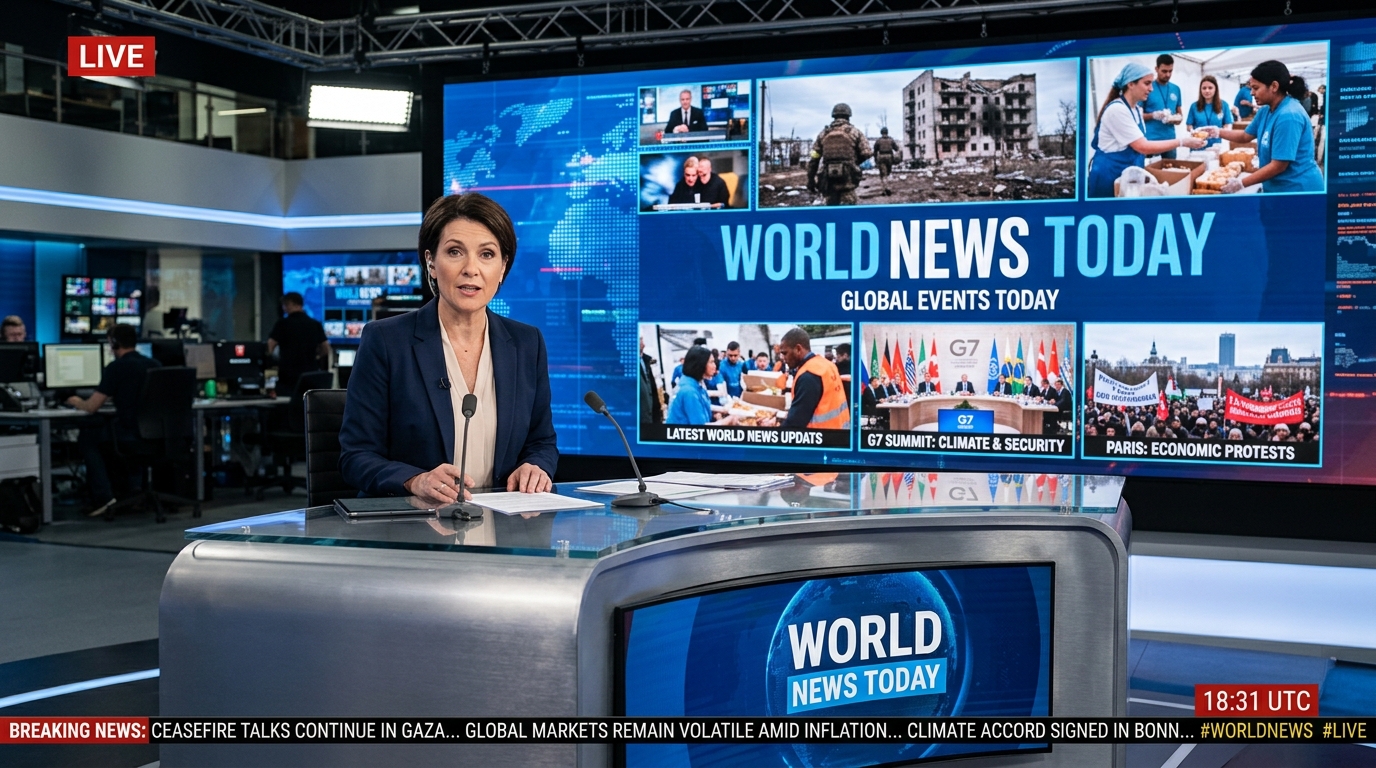
Global headlines today show rising geopolitical pressure in multiple regions, ongoing conflict negotiations, climate-related disasters, and economic uncertainty driven by energy disruptions and inflation concerns. International organizations are also warning about slowing global growth as governments struggle to balance security, diplomacy, and domestic stability.
Middle East Conflict and Diplomatic Tensions
US–Iran Negotiation Pressure
Tensions between the United States and Iran remain high as diplomatic talks continue under heavy military and political pressure. Officials suggest negotiations are fragile, with warnings of renewed escalation if nuclear agreements fail.
Gaza and Regional Fallout
The Gaza conflict continues to trigger international backlash after humanitarian interception incidents and diplomatic disputes involving multiple countries. Global protests and diplomatic summoning of ambassadors reflect rising global concern.
Oil and Energy Security Risks
Energy markets remain unstable due to Middle East tensions affecting oil supply routes and global pricing. The Strait of Hormuz situation continues to be a key risk factor for international trade and fuel stability.
Ceasefire Fragility
Temporary ceasefire arrangements in parts of the region remain unstable, with both sides accusing each other of violations and preparing for possible renewed conflict scenarios.
International Mediation Efforts
Global powers and regional organizations are actively pushing for diplomatic resolutions, but deep political divisions and security concerns continue to slow progress toward long-term peace agreements.
Europe and NATO Security Developments
NATO Military Readiness Increase
NATO allies are increasing military readiness due to rising concerns about Russian activity near Eastern European borders and drone-related security incidents.
Ukraine Conflict Stability Concerns
The war in Ukraine continues to shape European security policy, with ongoing discussions about long-term defense support and peace negotiation possibilities.
Baltic Region Tensions
Security alerts in Baltic states have intensified after drone interference incidents, raising concerns about hybrid warfare and regional destabilization risks.
Defense Spending Growth
European nations are increasing defense budgets to strengthen military capabilities and reduce dependency on external support amid global uncertainty.
Diplomatic Coordination Efforts
EU and NATO leaders are holding high-level meetings to coordinate security strategies and manage rising geopolitical risks across the continent.
Asia-Pacific Political and Economic Updates
Regional Trade Expansion
Countries in Asia-Pacific continue expanding trade partnerships to strengthen economic resilience and reduce dependency on volatile global markets.
Infrastructure Development Surge
Large-scale infrastructure projects are underway across multiple countries, focusing on transportation, energy, and digital connectivity improvements.
Political Stability Efforts
Governments are focusing on internal stability and policy reforms to manage inflation, employment challenges, and external geopolitical pressures.
Disaster Response Operations
Emergency response teams are active in regions affected by natural disasters, providing aid, evacuation support, and reconstruction efforts.
Technology Growth Acceleration
The region continues to lead in digital innovation, with rapid adoption of AI, fintech solutions, and smart manufacturing systems.
Global Economy and Market Shifts
Slowing Global Growth Forecasts
International financial institutions are warning of weaker global economic growth due to geopolitical tensions and energy instability.
Inflation and Interest Rate Pressure
Many economies continue facing inflation challenges, forcing central banks to maintain strict monetary policies to stabilize prices.
Energy Market Volatility
Oil and gas markets remain unstable due to supply chain disruptions and geopolitical risks affecting major production regions.
Employment Market Adjustments
Global labor markets are experiencing shifts as automation, AI adoption, and economic uncertainty reshape job demand patterns.
Trade Flow Realignment
International trade routes and supply chains are being redesigned to reduce risk exposure and improve long-term economic security.
Climate and Environmental Emergencies
Rising Global Temperatures
Scientists warn that 2026 could be one of the hottest years on record, with extreme heatwaves affecting multiple continents.
Severe Weather Events
Floods, storms, and wildfires are increasing in frequency and intensity, disrupting infrastructure and agriculture worldwide.
El Niño Impact Concerns
A strengthening El Niño pattern is expected to worsen global weather instability and increase climate-related disasters.
Environmental Policy Debate
Governments are debating how to balance economic development with climate commitments amid growing environmental risks.
Disaster Preparedness Expansion
Countries are investing more in early warning systems and disaster response infrastructure to reduce future climate-related losses.
Global Health and Humanitarian Issues
Ebola and Disease Outbreaks
Health authorities are monitoring Ebola outbreaks in parts of Africa, with concerns over spread and international coordination.
Humanitarian Crisis Response
Aid organizations are increasing efforts in conflict zones and disaster-hit regions to provide food, shelter, and medical assistance.
Migration Pressure Growth
Rising conflict and climate impacts are increasing migration flows, putting pressure on border policies and refugee systems.
Healthcare System Strain
Several countries are reporting pressure on healthcare infrastructure due to disease outbreaks and resource limitations.
International Aid Coordination
Global institutions are coordinating funding and logistics to improve response effectiveness in crisis regions.
Technology, Cybersecurity, and Innovation News
Rising Cybersecurity Threats
Cyberattacks targeting governments and corporations are increasing, prompting stronger digital defense strategies worldwide.
AI Integration Expansion
Artificial intelligence continues to expand across industries, improving automation, decision-making, and digital services.
Data Privacy Regulations
Governments are tightening data protection laws to secure user information and regulate technology companies more strictly.
Digital Infrastructure Growth
Cloud computing and digital platforms are expanding rapidly to support global connectivity and enterprise needs.
Innovation Competition
Countries and companies are competing aggressively in AI, semiconductor, and quantum research development.
International Politics and Leadership Updates
Election and Government Changes
Several countries are experiencing political transitions, coalition instability, and upcoming election campaigns affecting global diplomacy.
Diplomatic Realignments
Nations are reshaping alliances based on security needs, trade dependencies, and regional stability concerns.
Policy Reform Initiatives
Governments are introducing reforms focused on economy, defense, and digital regulation to adapt to global changes.
Global Leadership Summits
International meetings continue to address war, climate change, and economic cooperation at the highest diplomatic levels.
Rising Geopolitical Competition
Major global powers are competing for influence across trade routes, technology, and military strategy.
FAQs
What is the biggest global news today?
The biggest focus is ongoing Middle East tensions and global economic uncertainty.
Why is the Middle East in the news so much?
Because of conflicts, diplomatic negotiations, and energy supply risks affecting global stability.
Is the global economy slowing down?
Yes, forecasts show slower growth due to geopolitical tensions and inflation pressures.
What climate issues are currently affecting the world?
Extreme heat, floods, wildfires, and stronger El Niño patterns are increasing worldwide.
How is AI affecting global news and economy?
AI is transforming industries, increasing automation, and reshaping job markets globally.
Conclusion
Today’s world news highlights rising geopolitical tensions, climate instability, economic uncertainty, and rapid technological change shaping global systems. From Middle East conflicts to climate emergencies and AI-driven transformation, global events are deeply interconnected. These developments continue influencing security, markets, and daily life, making international awareness essential for understanding the rapidly changing world landscape today.
