

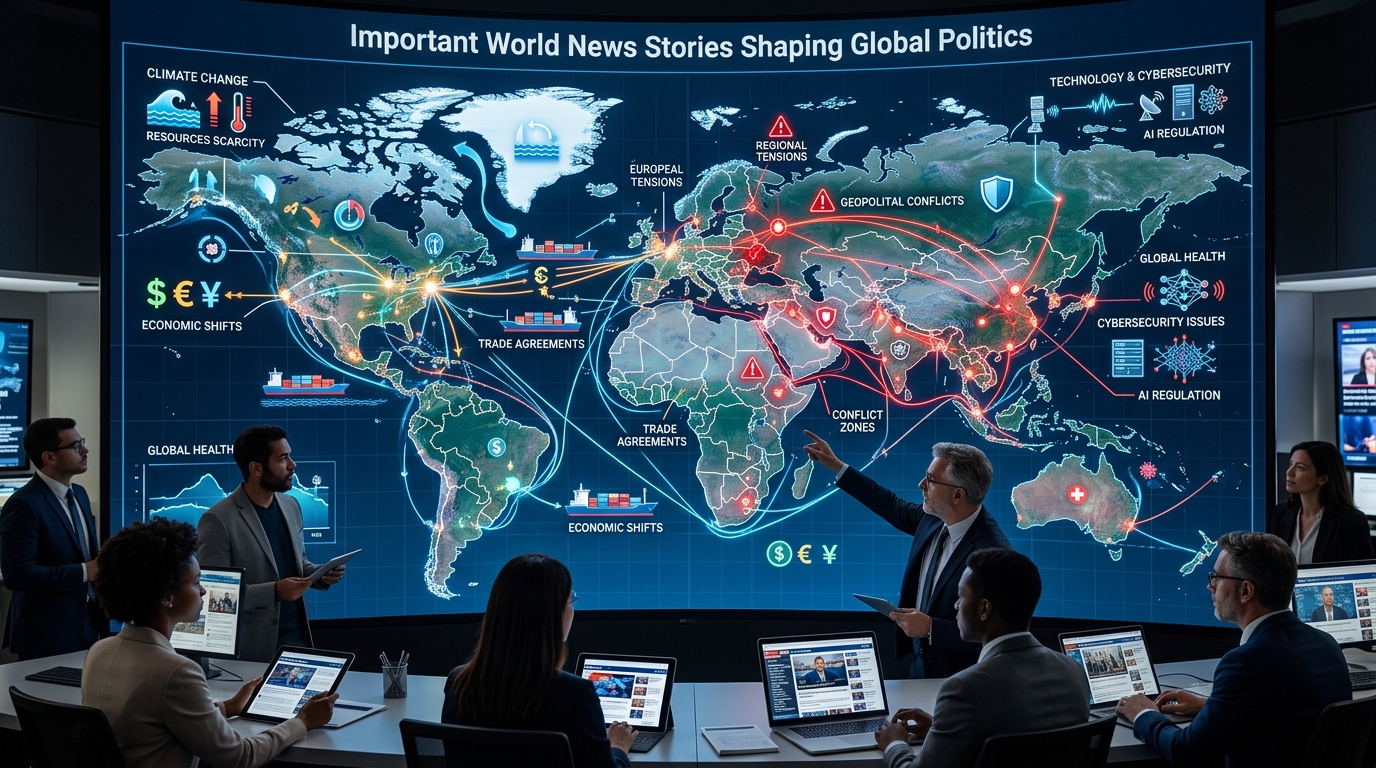
Important world news stories are continuously shaping global politics by influencing diplomacy, security alliances, economic decisions, and international power balance. From ongoing conflicts and shifting trade relationships to elections in major economies and climate negotiations, these developments are redefining how nations cooperate and compete. In today’s interconnected world, political decisions in one region often create ripple effects across continents, making global awareness more important than ever for understanding international stability and future trends.
| Political Area | Global Impact |
|---|---|
| Wars & Conflicts | Security Instability |
| Elections | Policy Shifts |
| Trade Relations | Economic Balance |
| Alliances | Military Cooperation |
| Climate Diplomacy | Global Agreements |
Geopolitical Conflicts and Wars
Ongoing Regional Wars
Ongoing regional wars continue to dominate global political discussions by affecting security, humanitarian conditions, and international alliances. Conflicts involving major and regional powers influence global energy prices, refugee movements, and diplomatic relations. These wars also reshape defense strategies and push countries to reassess foreign policy priorities.
Ceasefire Negotiations Efforts
Ceasefire negotiations are a major focus of international diplomacy as global organizations attempt to reduce violence in conflict zones. Mediators work between opposing sides to establish temporary or permanent peace agreements. These efforts often involve complex compromises and long diplomatic discussions aimed at stabilizing affected regions.
Military Alliance Expansion
Military alliances are expanding as countries strengthen defense cooperation in response to global security threats. Partnerships between nations increase joint exercises, intelligence sharing, and coordinated defense planning. These alliances aim to deter aggression and maintain regional stability in an increasingly uncertain geopolitical environment.
Arms Control Discussions
Arms control discussions are gaining attention as nations seek to limit the spread of advanced weapons systems. Diplomatic talks focus on nuclear weapons reduction, missile regulation, and military transparency. These negotiations aim to reduce global tensions and prevent large scale conflicts between powerful states.
Proxy Conflicts Influence
Proxy conflicts continue to shape global politics as major powers support opposing sides in regional disputes. These indirect confrontations increase instability and prolong wars in affected regions. Proxy involvement often complicates peace efforts and creates broader international tensions between competing geopolitical blocs.
Global Economic Politics
Trade War Tensions
Trade war tensions between major economies are influencing global markets and diplomatic relations. Tariffs, export restrictions, and trade barriers are used as political tools to gain economic advantage. These actions impact supply chains, inflation, and international cooperation among trading partners worldwide.
Energy Supply Politics
Energy supply politics play a critical role in shaping alliances and conflicts between nations. Countries dependent on oil and gas imports are affected by production decisions and geopolitical disputes. Energy resources often become strategic tools in international negotiations and diplomatic pressure.
Sanctions and Economic Pressure
Economic sanctions are widely used as foreign policy tools to influence political behavior of nations. These restrictions target trade, finance, and technology access. Sanctions impact national economies and often lead to broader diplomatic tensions between global powers and affected states.
Currency and Financial Influence
Global currencies and financial systems are central to international political influence. Strong economies use monetary policies and financial institutions to shape global economic conditions. Currency fluctuations and interest rate decisions also affect trade relations and cross border investments significantly.
Global Investment Shifts
Investment flows are shifting as countries seek stable and emerging markets for economic growth. Foreign direct investment influences infrastructure development and political relationships. These shifts reflect changing global power dynamics and economic priorities among developed and developing nations.
Elections and Political Transitions
Major National Elections
Major national elections in influential countries shape global political direction and policy decisions. Leadership changes impact foreign relations, defense strategies, and economic policies. Election outcomes often influence global alliances and international cooperation frameworks significantly.
Leadership Changes Impact
Leadership changes in key nations often result in shifts in diplomatic priorities and international relations. New governments may alter trade agreements, defense partnerships, and climate commitments. These transitions create uncertainty but also opportunities for new global cooperation.
Democratic Movements Growth
Democratic movements are expanding in several regions as citizens demand political reforms and greater transparency. These movements influence government policies and international responses. They often lead to negotiations, protests, and gradual political restructuring within affected countries.
Electoral Interference Concerns
Concerns about electoral interference are rising globally due to cyber threats and misinformation campaigns. Governments are strengthening election security systems to protect democratic processes. These challenges highlight the growing role of technology in modern political systems.
Political Polarization Trends
Political polarization is increasing in many countries, affecting domestic stability and international relations. Divided political environments can slow decision making and reduce diplomatic effectiveness. This trend influences global cooperation and policy consistency across nations.
International Alliances and Diplomacy
NATO Strategic Expansion
NATO expansion discussions continue to influence European and global security structures. The alliance focuses on collective defense and deterrence strategies. Expansion efforts often affect relations between member and non member states, shaping global military balance.
Regional Cooperation Blocks
Regional cooperation organizations strengthen economic and political ties between neighboring countries. These groups promote trade, infrastructure development, and security coordination. Such alliances help stabilize regions and improve diplomatic engagement among participating nations.
United Nations Diplomacy
The United Nations plays a central role in global diplomacy by mediating conflicts and promoting peace initiatives. It facilitates international cooperation on humanitarian aid, climate action, and security issues. Its decisions influence global political discussions and resolutions.
Bilateral Trade Agreements
Bilateral trade agreements strengthen economic and political relationships between two countries. These agreements reduce tariffs, encourage investment, and improve market access. They play a key role in shaping global trade networks and diplomatic partnerships.
Defense Cooperation Agreements
Defense cooperation agreements enhance military collaboration between allied nations. These partnerships include training programs, intelligence sharing, and joint operations. Such agreements improve collective security and reinforce strategic alliances worldwide.
Middle East Political Developments
Regional Power Rivalries
Regional power rivalries in the Middle East continue to shape global energy markets and diplomatic relations. Competing interests between countries influence political stability and security dynamics. These rivalries often attract international involvement and mediation efforts.
Peace Negotiation Efforts
Peace negotiation efforts in the Middle East aim to resolve long standing conflicts through diplomatic dialogue. International mediators facilitate discussions between opposing sides. These efforts are essential for achieving long term stability in the region.
Oil Politics Influence
Oil politics remain a central factor in Middle Eastern geopolitics. Production levels and export decisions influence global energy prices and economic stability. Control over oil resources gives countries significant geopolitical leverage.
Refugee and Migration Issues
Conflict and instability in the region contribute to large scale refugee and migration challenges. Countries and international organizations work together to provide humanitarian assistance. These issues also influence political debates in receiving nations.
Diplomatic Normalization Agreements
Diplomatic normalization agreements between countries are reshaping regional alliances and political relationships. These agreements aim to improve economic cooperation and reduce historical tensions. They play a significant role in transforming regional diplomacy.
Asia Pacific Geopolitical Shifts
South China Sea Disputes
South China Sea disputes remain a major geopolitical issue involving territorial claims and maritime security. These tensions affect global trade routes and military strategies. International actors closely monitor developments in the region.
China US Relations
Relations between China and the United States significantly influence global politics and economic stability. Trade policies, technology competition, and security concerns shape this complex relationship. It remains one of the most important global diplomatic dynamics.
India Rising Influence
India’s growing economic and political influence is reshaping regional and global power structures. Increased diplomatic engagement and trade expansion strengthen its international position. India plays a key role in global strategic discussions.
Japan Security Policies
Japan’s evolving security policies reflect changing regional threats and alliances. The country is increasing defense capabilities and strengthening international partnerships. These changes impact regional stability in the Asia Pacific.
ASEAN Cooperation Growth
ASEAN cooperation is enhancing regional stability through economic integration and diplomatic coordination. Member countries collaborate on trade, security, and environmental issues. This cooperation strengthens Asia Pacific political and economic ties.
Global Humanitarian and Social Politics
Human Rights Debates
Human rights debates continue to influence international relations and political decisions. Countries face pressure to improve civil liberties and legal protections. These discussions often shape diplomatic relationships and foreign aid policies.
Global Refugee Policies
Refugee policies are becoming central to global political discussions due to rising displacement worldwide. Governments and organizations coordinate resettlement and humanitarian assistance. These policies impact international relations and domestic political debates.
Climate Change Diplomacy
Climate change diplomacy is shaping international cooperation on environmental policies and carbon reduction goals. Global agreements aim to limit emissions and support sustainable development. These negotiations influence economic and political decisions worldwide.
Poverty and Development Aid
International development aid plays a major role in global politics by supporting poverty reduction and economic growth. Donor countries and organizations provide financial assistance to developing regions. This aid strengthens diplomatic relationships and global stability.
Global Health Governance
Global health governance focuses on international cooperation to manage pandemics and healthcare challenges. Organizations coordinate responses, funding, and research efforts. Health crises often influence political decisions and international collaboration.
What are the most important global political news topics?
Key topics include wars, elections, trade conflicts, alliances, climate diplomacy, and humanitarian crises.
Why do world news stories affect global politics?
They influence diplomacy, economic policies, security strategies, and international relationships.
How do conflicts impact global politics?
Conflicts affect alliances, energy markets, migration, and international security decisions.
What role do elections play in global affairs?
Elections determine leadership changes that shape foreign policy and global cooperation.
How does climate diplomacy affect politics?
It drives international agreements on emissions, sustainability, and environmental protection.
Important world news stories continue shaping global politics by redefining alliances, influencing economic systems, and driving diplomatic decisions. From ongoing conflicts and trade tensions to elections and climate negotiations, these developments impact nations worldwide. Understanding global political news helps individuals stay informed about shifting power structures and the interconnected nature of modern international relations today.
