

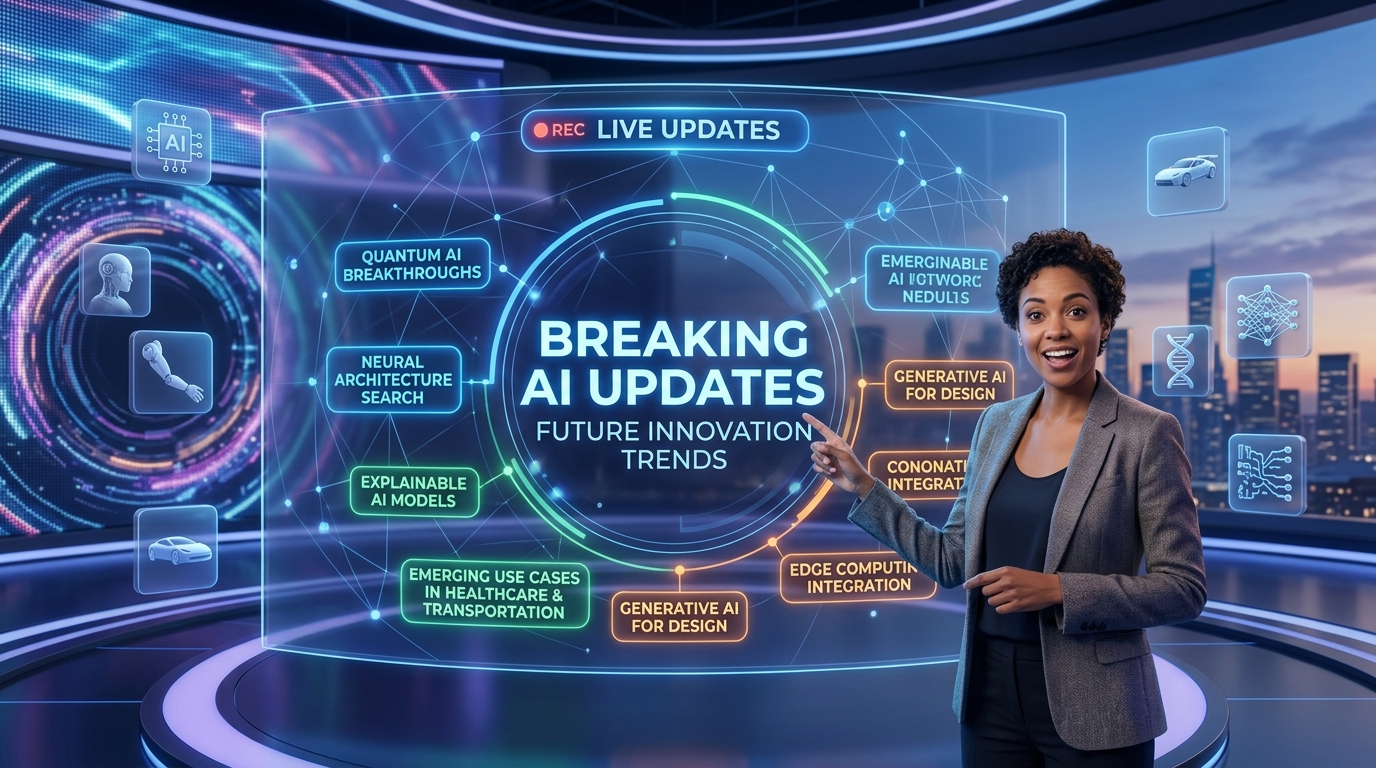
Technology is moving at an unprecedented speed, and artificial intelligence continues to lead the next wave of global innovation. From advanced machine learning models to automation systems and intelligent digital ecosystems, AI is reshaping how industries operate and how people interact with technology. These breaking updates highlight a future driven by smarter systems, faster decision-making, and deeply integrated human–machine collaboration.
Advanced AI Model Breakthroughs
Next Generation Language Models
New generation language models are becoming more accurate, context-aware, and capable of handling complex reasoning tasks. These systems are improving content generation, coding assistance, and real-time communication. Their ability to understand intent and deliver human-like responses is making them essential tools for digital transformation across industries.
Multimodal Intelligence Expansion
AI systems are rapidly evolving to process text, images, audio, and video together. This multimodal capability allows machines to interpret real-world situations more effectively. It enhances applications in healthcare diagnostics, security systems, education tools, and creative industries by delivering more complete and accurate insights.
Real Time Adaptive Learning
Adaptive AI models are now capable of learning continuously from live data streams. This means systems can adjust their behaviour instantly based on new inputs. Businesses are using this capability to improve customer service, fraud detection, and predictive analytics with higher accuracy and responsiveness.
AI Powered Reasoning Systems
New reasoning-based AI systems go beyond pattern recognition and can now perform logical thinking and problem solving. These advancements are closing the gap between human and machine decision-making, especially in research, finance, and strategic planning applications where accuracy is critical.
Energy Efficient AI Models
Researchers are developing lightweight AI models that consume less computing power while maintaining high performance. These innovations reduce operational costs and environmental impact, making AI more accessible and sustainable for global adoption.
Automation and Intelligent Systems
Fully Autonomous Workflows
Businesses are increasingly adopting fully automated workflows where AI handles entire processes from start to finish. This includes customer support, data processing, and supply chain management. These systems improve efficiency and reduce human workload significantly.
AI Driven Industrial Robotics
Industrial robots powered by AI are becoming more precise, flexible, and self-learning. They can now adapt to changing environments in manufacturing plants, improving productivity and reducing operational errors across production lines.
Smart Decision Engines
AI decision engines analyse massive datasets to recommend optimal business strategies in real time. These systems are being used in finance, healthcare, and logistics to improve accuracy and reduce risk in critical decision-making processes.
Autonomous Software Agents
AI agents are emerging as digital workers capable of completing complex online tasks independently. These agents can manage scheduling, research, communication, and data analysis without continuous human supervision.
Predictive Maintenance Systems
Industries are using AI to predict equipment failures before they happen. These systems analyse sensor data to schedule maintenance proactively, reducing downtime and increasing operational efficiency.
AI in Everyday Life
Hyper Personalized Digital Assistants
AI assistants are becoming more personalised by learning user habits, preferences, and routines. They now provide tailored recommendations for productivity, entertainment, and lifestyle management.
Smart Healthcare Monitoring
Wearable AI devices continuously monitor vital signs and detect early signs of illness. This helps users take preventive action and enables doctors to deliver more accurate remote healthcare services.
Intelligent Home Ecosystems
Smart homes are becoming fully integrated systems where lighting, security, appliances, and energy use are controlled through AI. These ecosystems improve comfort, safety, and energy efficiency.
AI Powered Learning Platforms
Education platforms are using AI to create personalised learning paths for students. These systems adapt content difficulty and teaching methods based on individual performance levels.
Context Aware Mobile Applications
Mobile apps are becoming smarter by understanding user location, behaviour, and intent. This allows them to deliver highly relevant suggestions and services in real time.
Future Computing Innovations
Quantum AI Integration
Quantum computing combined with AI is expected to solve complex problems far beyond the capability of classical computers. This breakthrough could revolutionise fields like cryptography, drug discovery, and climate modelling.
Edge Intelligence Growth
Edge AI processes data closer to devices rather than centralized servers. This reduces latency and enables real-time decision-making for applications like autonomous vehicles and smart sensors.
Neural Interface Technologies
Brain-computer interfaces are advancing toward direct communication between human thoughts and machines. This innovation could transform healthcare, communication, and assistive technologies.
Cloud AI Infrastructure Expansion
Cloud-based AI systems are becoming more powerful and scalable, allowing businesses to access advanced computing resources without heavy hardware investments.
Distributed AI Networks
AI systems are increasingly being deployed across decentralized networks, improving reliability, speed, and data privacy in global applications.
AI in Business Innovation
Intelligent Market Forecasting
AI systems are improving market prediction accuracy by analysing global trends, consumer behaviour, and economic indicators. Businesses use these insights to make strategic decisions.
Automated Customer Experience Systems
Companies are deploying AI systems that handle customer interactions across multiple channels, providing faster responses and improved satisfaction.
AI Driven Product Development
Artificial intelligence is being used to design and test new products faster by simulating user feedback and market demand before production.
Smart Financial Analytics
AI tools are transforming financial planning by offering real-time insights into investments, risks, and revenue optimisation strategies.
Cyber Defense Intelligence Systems
AI powered cybersecurity tools detect and neutralise threats in real time, strengthening digital protection for businesses and individuals.
Global Innovation Trends
Green AI Development
Sustainable AI technologies are being designed to reduce energy consumption while maintaining high computational performance, supporting global environmental goals.
AI Regulation Frameworks
Governments worldwide are developing policies to ensure responsible AI use, focusing on transparency, safety, and ethical development.
Human AI Collaboration Models
The future workplace is shifting toward collaboration between humans and AI systems, enhancing creativity, productivity, and efficiency.
Smart Infrastructure Systems
Cities are integrating AI into transportation, energy, and public services to improve efficiency and urban living standards.
Digital Economy Acceleration
AI is driving the expansion of the global digital economy through automation, e-commerce growth, and intelligent financial systems.
FAQs
What is the biggest AI innovation trend right now?
Generative AI and autonomous systems are currently leading global innovation trends.
How is AI shaping the future of technology?
AI is enabling automation, smarter decision-making, and highly personalised digital experiences.
Will AI replace human jobs in the future?
AI will automate repetitive tasks but also create new opportunities in advanced industries.
What industries benefit most from AI innovation?
Healthcare, finance, manufacturing, education, and technology sectors benefit the most.
What is the future scope of AI development?
AI will become more autonomous, efficient, and deeply integrated into daily life.
Conclusion
Breaking AI updates show that future innovation is driven by intelligent systems, automation, and advanced computing technologies. From quantum AI to autonomous agents, these developments are reshaping industries and human experiences. As AI continues to evolve, it will play a central role in building smarter economies, improving efficiency, and transforming the global digital landscape into a more connected and intelligent future.
