

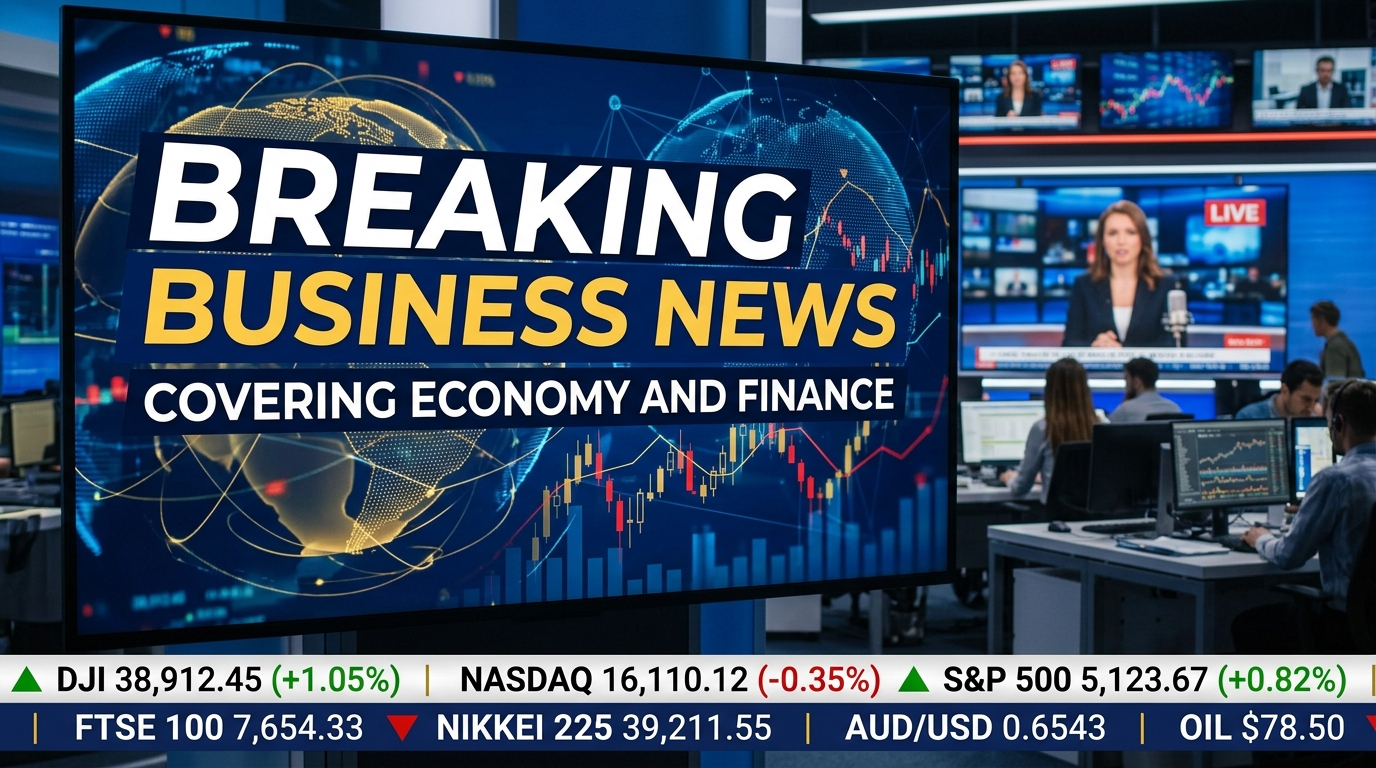
Global business and financial markets are moving rapidly as economies adjust to inflation pressures, shifting interest rates, digital transformation, and geopolitical uncertainty. Breaking business news provides real-time insight into how companies, investors, and governments respond to these changes. From stock market fluctuations to emerging fintech innovations, today’s economy reflects a highly interconnected and fast-evolving global financial system.
Global Economic Trends
Inflation and Cost Pressures
Inflation continues to influence global economies by increasing the cost of goods, services, and production. Central banks are adjusting monetary policies to stabilize prices while maintaining economic growth. Consumers and businesses are adapting spending habits as financial pressure remains a key global concern.
Interest Rate Policies
Central banks worldwide are managing interest rates to control inflation and support economic stability. Rate hikes and cuts directly impact borrowing costs, investments, and consumer spending. These decisions play a major role in shaping global financial conditions and market confidence.
GDP Growth Fluctuations
Global GDP growth remains uneven across regions due to varying economic recovery speeds. Some economies are expanding through technology and exports, while others face slowdowns due to debt and inflation challenges. These differences influence global investment flows and trade patterns.
Employment Market Changes
Labor markets are evolving as automation, remote work, and digital skills reshape employment opportunities. Many industries are experiencing talent shortages while others face restructuring. Workforce transformation is becoming a central factor in long-term economic planning.
Government Fiscal Policies
Governments are implementing fiscal strategies such as taxation reforms, stimulus packages, and public spending adjustments. These policies aim to support economic recovery, reduce debt pressure, and encourage sustainable development across national economies.
Global Financial Markets
Stock Market Volatility
Stock markets are experiencing fluctuations due to global uncertainty, corporate earnings reports, and geopolitical tensions. Investors are shifting toward safer assets while monitoring long-term growth opportunities in technology and energy sectors.
Currency Exchange Movements
Foreign exchange markets remain dynamic as currencies react to inflation, interest rates, and global trade shifts. Currency instability affects import costs, export competitiveness, and international investment decisions across economies.
Cryptocurrency Market Trends
Cryptocurrency markets continue to evolve with regulatory changes, institutional adoption, and technological upgrades. Despite volatility, digital assets remain a significant part of global financial discussions and investment portfolios.
Bond Market Performance
Bond markets are adjusting to changing interest rates and inflation expectations. Investors are evaluating government and corporate bonds based on risk and return profiles in uncertain economic conditions.
Commodity Price Changes
Commodity markets, including oil, gold, and agricultural products, are influenced by supply chain disruptions and geopolitical events. These price movements impact inflation, trade balances, and global economic stability.
Corporate Business Developments
Global Company Earnings Reports
Major corporations are releasing earnings reports that reflect market demand, operational efficiency, and global economic conditions. Strong or weak earnings often influence investor confidence and stock performance significantly.
Mergers and Acquisitions Activity
Mergers and acquisitions are increasing as companies seek expansion, market share growth, and technological capabilities. These deals reshape industries and create stronger competitive positions in global markets.
Startup Ecosystem Growth
Startup ecosystems are expanding rapidly, especially in technology, fintech, and health sectors. Venture capital funding continues to support innovation and early-stage business development worldwide.
Corporate Layoffs and Restructuring
Many companies are restructuring operations to reduce costs and improve efficiency. Layoffs in certain sectors reflect automation trends and changing business priorities in a competitive environment.
Global Trade Expansion
International trade is adapting to new agreements, supply chain diversification, and regional partnerships. Businesses are exploring new markets to reduce dependency and improve resilience.
Banking and Finance Sector
Digital Banking Expansion
Digital banking is transforming financial services through mobile apps, online payments, and AI-powered customer support. This shift improves accessibility and reduces operational costs for banks.
Loan and Credit Market Trends
Credit markets are influenced by interest rates and economic uncertainty. Lending conditions are tightening in some regions while expanding in others based on financial stability.
Investment Banking Activities
Investment banks are actively involved in IPOs, fundraising, and advisory services for corporate expansion. These activities support global capital flow and business growth.
Financial Regulation Updates
Regulators are introducing new compliance frameworks to improve transparency and reduce financial risks. These rules aim to protect investors and ensure stable financial systems.
Wealth Management Growth
Wealth management services are expanding as individuals seek professional financial planning and investment strategies. Demand is increasing for diversified portfolios and long-term financial security.
Technology in Finance
Fintech Innovation Growth
Fintech companies are revolutionizing payments, lending, and digital banking services. These innovations improve speed, accessibility, and financial inclusion globally.
AI in Financial Analysis
Artificial intelligence is being used to analyse market trends, detect fraud, and improve investment decisions. This technology enhances accuracy and efficiency in financial operations.
Blockchain in Finance
Blockchain technology is increasing transparency and security in financial transactions. It is widely used in payments, smart contracts, and decentralized finance systems.
Automated Trading Systems
Algorithmic trading systems execute transactions at high speed using data-driven strategies. These systems improve efficiency and reduce human error in financial markets.
Cybersecurity in Banking
Financial institutions are strengthening cybersecurity systems to protect customer data and prevent digital fraud. Security remains a top priority in digital finance transformation.
Global Investment Trends
Foreign Direct Investment Flow
Foreign direct investment is shifting toward emerging markets, technology sectors, and renewable energy projects. Investors are seeking long-term growth opportunities in stable economies.
Sustainable Investment Growth
Environmental, social, and governance (ESG) investing is gaining popularity. Investors are prioritizing sustainability alongside financial returns in their portfolios.
Real Estate Market Changes
Global real estate markets are influenced by interest rates, urbanization, and remote work trends. Property investment strategies are adapting to changing demand patterns.
Private Equity Expansion
Private equity firms are increasing investments in startups and mid-sized companies. These investments support innovation and business expansion across industries.
Global Portfolio Diversification
Investors are diversifying portfolios across asset classes and regions to reduce risk and improve long-term returns in uncertain markets.
Future of Economy and Finance
Digital Currency Adoption
Central bank digital currencies are being explored to modernize financial systems and improve transaction efficiency in global economies.
AI Driven Financial Systems
Artificial intelligence will continue to enhance financial forecasting, risk management, and automated decision-making in the future economy.
Global Economic Integration
International economies are becoming more interconnected through trade, technology, and financial systems, increasing both opportunity and complexity.
Sustainable Economic Models
Sustainability-focused economic strategies are gaining importance as governments and businesses prioritize environmental responsibility and long-term growth.
Financial Technology Evolution
Fintech innovation will continue reshaping banking, payments, and investment systems, making financial services faster and more accessible.
FAQs
Why is breaking business news important?
It helps investors and businesses understand market changes and make informed financial decisions.
What affects global financial markets the most?
Inflation, interest rates, geopolitical events, and corporate earnings significantly influence markets.
How does AI impact finance?
AI improves forecasting, fraud detection, trading efficiency, and financial decision-making.
Why are stock markets so volatile?
Global uncertainty, economic data, and investor sentiment cause frequent market fluctuations.
What is the future of global finance?
It will be driven by digital transformation, AI, fintech innovation, and sustainable investing.
Conclusion
Breaking business news reflects the fast-changing nature of the global economy and financial markets. From inflation trends to AI-driven finance and investment shifts, every update impacts businesses and investors worldwide. Staying informed about economic developments is essential for making smart decisions, managing risks, and understanding the direction of global financial growth in an increasingly connected world.
